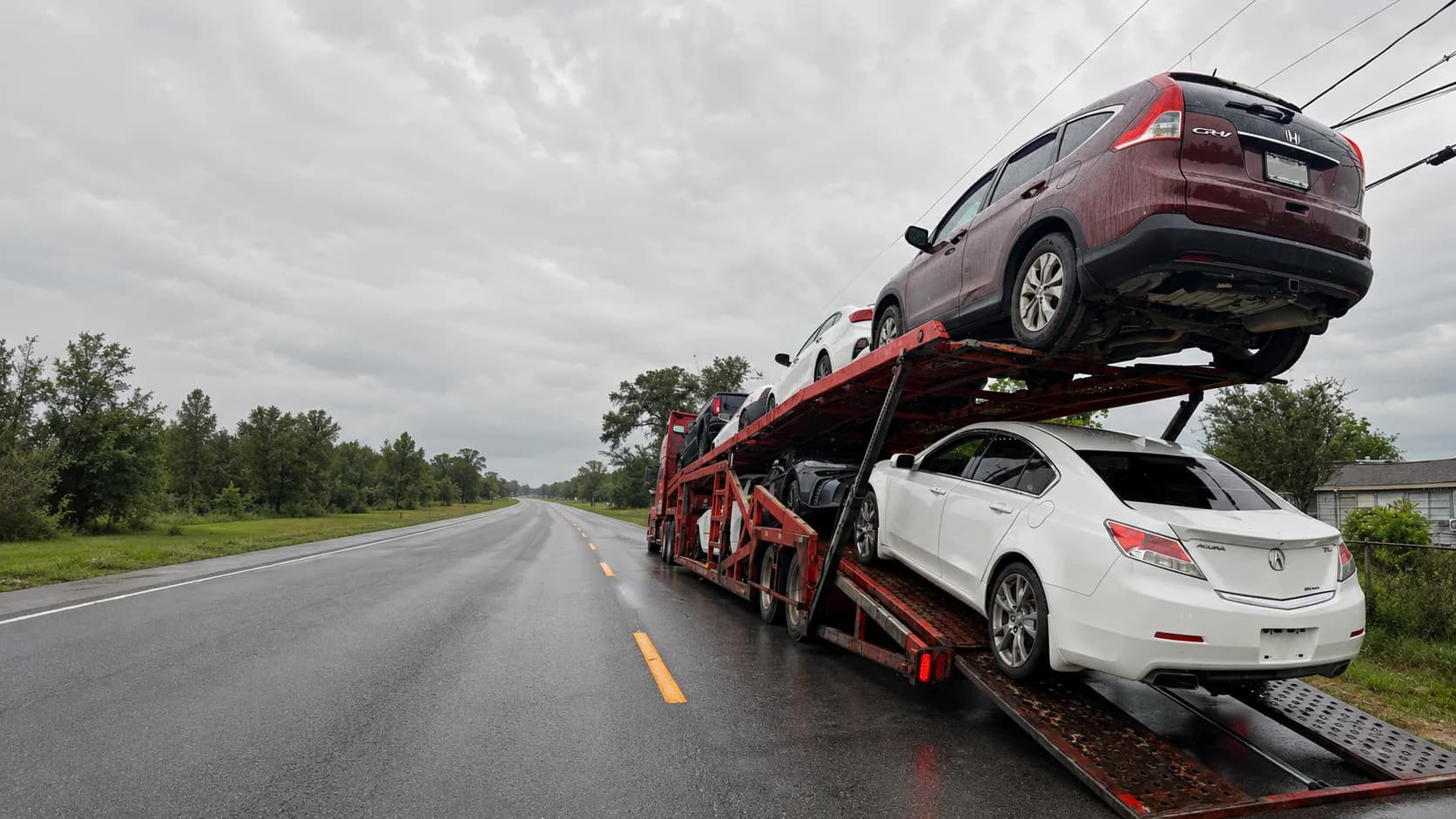

Shipping a Lowered Car: Clearance and Loading Questions
Shipping a lowered car? Send the right photos and ask about ramps, liftgates and clearance before the driver arrives.
If your car sits low, tell us before we start arranging transport. A splitter, low exhaust or suspension change can make a big difference when it's time to load. We want the driver looking at the right information before pickup day.
You don't have to know which trailer to request. Start with the car, a few clear photos and anything you're concerned about. Then we can discuss the loading setup with the carrier.
Show us where the car sits low
Let us know if it's lowered from stock and what has changed. Think front splitter, side skirts, low exhaust, wide wheels or suspension work. Mention damaged or loose parts as well.
Send current front, side and rear photos, along with a closer view of the low spots. A photo from before the car was lowered won't show the driver what they're picking up now. The actual driver should review the clearance concerns before the move.
Does it run and drive? Is it manual or automatic? If it has a lift setting or a special operating sequence, share the instructions and any manufacturer restrictions. Those details help the driver plan how to move it.
Ask how the car will get onto the trailer
The question isn't just, "Is the trailer enclosed?" It's, "How are we getting this car onto it?" A car that clears the ground on a flat surface can still scrape where the loading angle changes.
Tell us if you've had trouble loading it before. Ask what equipment the driver will bring, whether suitable ramp extensions are needed and how the splitter or low underbody will clear the transition.
Purpose-built loading ramps can reduce the approach angle, but the setup has to fit the car and trailer. Race Ramps offers a calculator using both vehicle and trailer details. If more information or a measurement is needed, the carrier can explain what will help assess this particular setup.
See Race Ramps' trailer-loading guidance
Would a liftgate be a better fit?
For some low cars, yes. With a liftgate, the car rolls onto a platform near ground level, then the platform rises to trailer height. That can avoid the steeper climb of an inclined loading ramp.
The driver still needs to check the transition onto the platform and the space inside the trailer. Vehicle weight and platform size matter, too. Enclosed trailers don't all have liftgates, and a liftgate alone doesn't settle every clearance concern.
Think about the driveway, not just the car
A steep driveway, speed bump or tight turn can cause trouble before loading even starts. Tell us about access at pickup and delivery. If a large carrier can't safely reach the address, discuss a workable meeting location with us in advance.
Leave time for the pickup inspection and clear condition photos. Point out existing splitter marks or other visible damage. Keep the pickup record so you can compare the car's condition when it arrives.
What we need to get started
- Year, make and model, plus the changes made to the car.
- Current photos showing clearance and vulnerable areas.
- Whether it runs and whether it's manual or automatic.
- Any lift-mode or operating instructions.
- Pickup and delivery locations, access concerns and requested dates.
Tell us what's different about your car and what you're worried about. We'll use that information when reviewing transport options and discussing loading suitability with the carrier.