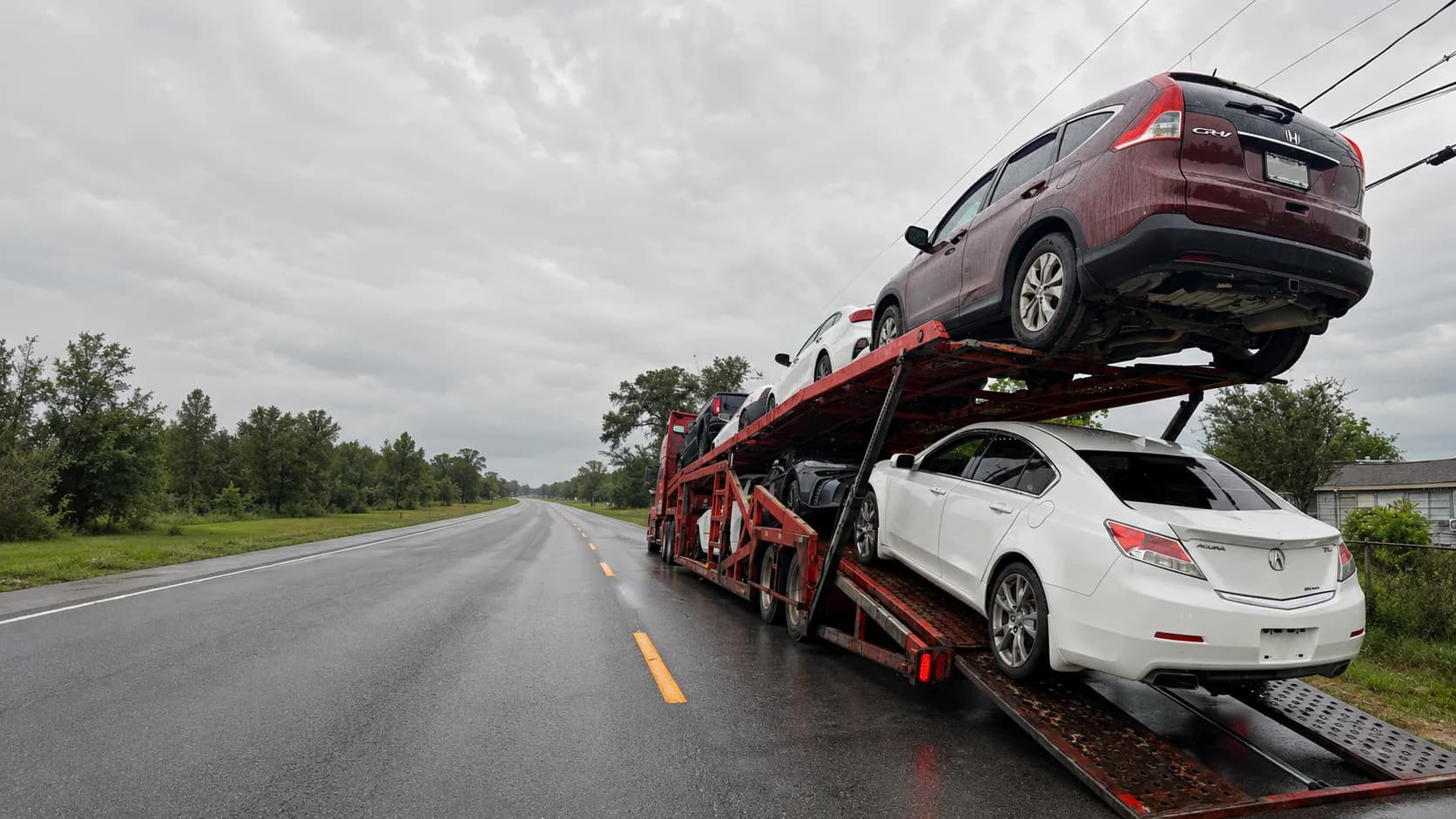

Auction Car Transport: What to Confirm Before Pickup
Bought a car at auction? Here's what to check before pickup, from release paperwork and vehicle condition to loading and delivery.
Bought a car at auction? Let's make sure it's ready to come home. Before a driver heads to the lot, we need to know the car is released, how it loads and who will receive it. Getting those details sorted early helps keep pickup day from turning into a second round of phone calls.
First, make sure the auction can release the car
Start with your auction account or the location holding the vehicle. Has payment cleared? Is the car approved for pickup? What does your transporter need at the gate? Sending payment and having the car released aren't always the same step.
Have the lot or stock number, vehicle details and exact location handy. Send us the required pickup authorization through the agreed channel. You don't need to share your auction password—the driver needs the release information for that vehicle.
Check the pickup hours and instructions
Each auction location has its own pickup process. Find out whether the driver needs an appointment, when loading is available and whether there's a collection deadline on your purchase.
Copart, for example, uses transporter pickup information that includes a Gate PIN and appointment instructions. Follow the current steps for your vehicle and location. Don't assume another auction uses the same process.
If storage charges are a concern, tell us the actual deadline when you request the move. We can work with that information while checking pickup options. A deadline still needs an available carrier and a confirmed plan.
Tell us what condition it's in
Does it start? Does it move? Will it roll, steer and brake? Those answers help us understand what the driver will be working with. A year, make and model won't tell us whether a wheel is locked or the keys are missing.
Let us know about flat tires, suspension damage, loose parts, leaks or anything else that could affect loading. If you're unsure, ask the auction what it can confirm. Photos help, too. We'd rather know about a concern before the truck arrives.
For a nonrunning or damaged car, loading and unloading both need a plan. Equipment available at the auction may not be waiting at your house, shop or receiving lot. Tell us what help is available at each end so the carrier can review the move.
Have the delivery side ready, too
Where's the car going, and who's meeting the driver? Share the receiving contact, business hours and any access issues. A gated lot, narrow street or shop closing time can affect how the delivery is arranged.
When the car arrives, compare its condition with the pickup inspection and photos. Auction damage should still be documented—existing damage doesn't make the transport inspection less important. Point out any concern with the driver during the handoff and keep the inspection records.
Here's what to have ready
- The vehicle, lot or stock number and pickup location.
- Confirmation that the auction can release it.
- Required pickup authorization, hours and appointment instructions.
- What you know about its condition, plus photos where available.
- The delivery contact, access details and unloading arrangements.
Whether it's headed to your driveway or your dealership, start with the details of the actual move. Day Night Dispatching can review auction transport options around the vehicle, route and pickup requirements.